

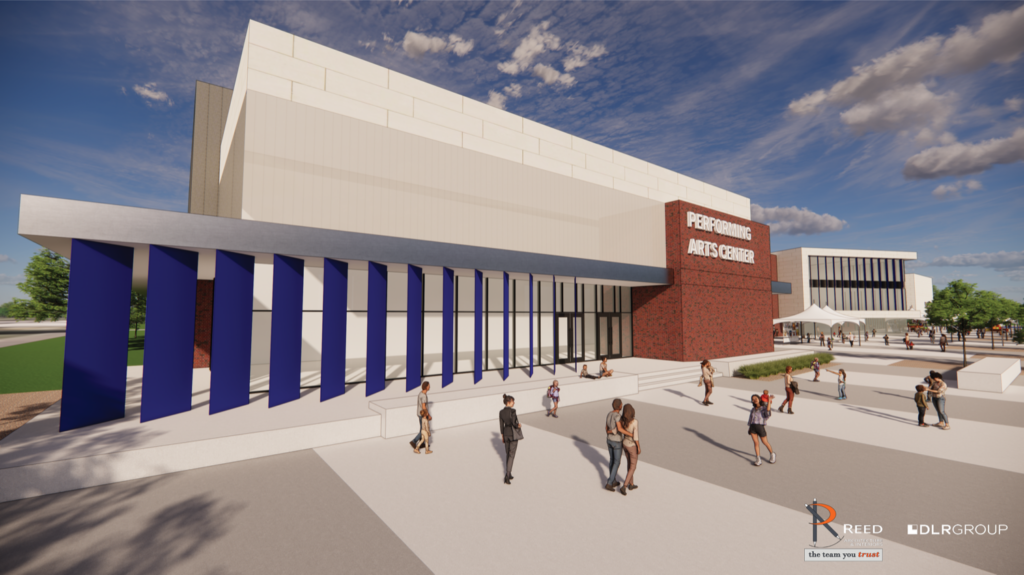
When the new Sapulpa Performing Arts Center opens, students will have first priority on its stage—but the vision for the facility extends far beyond school plays and assemblies.
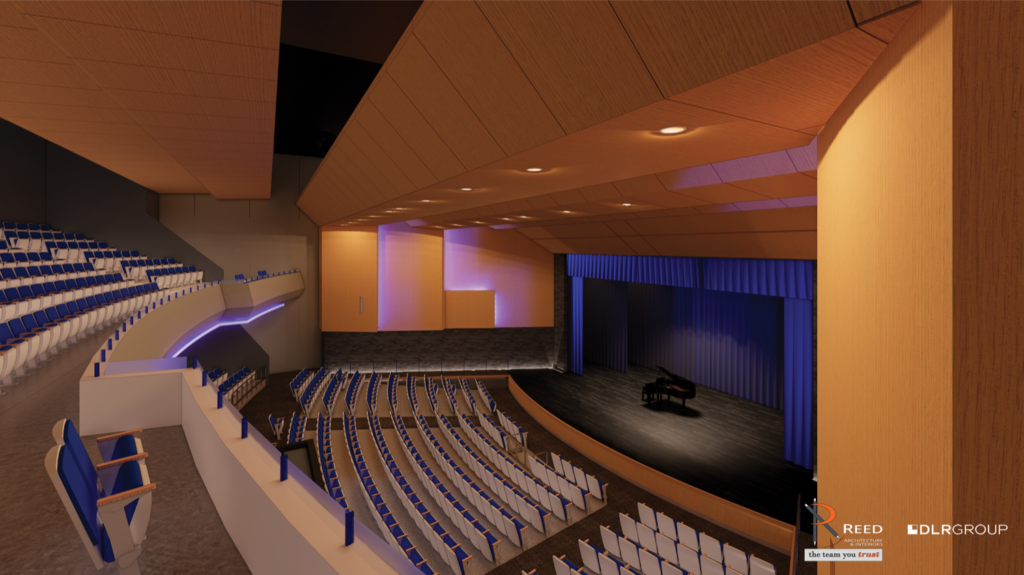
The 1,200-seat venue is being designed to accommodate professional touring productions, concerts and other performances while giving Sapulpa students access to equipment and opportunities typically found in major performing arts venues.
Kim Frie, director of Fine Arts and the Performing Arts Center for Sapulpa Public Schools, said Superintendent Rob Armstrong envisioned a facility that would serve students first while also becoming a destination for the wider community.
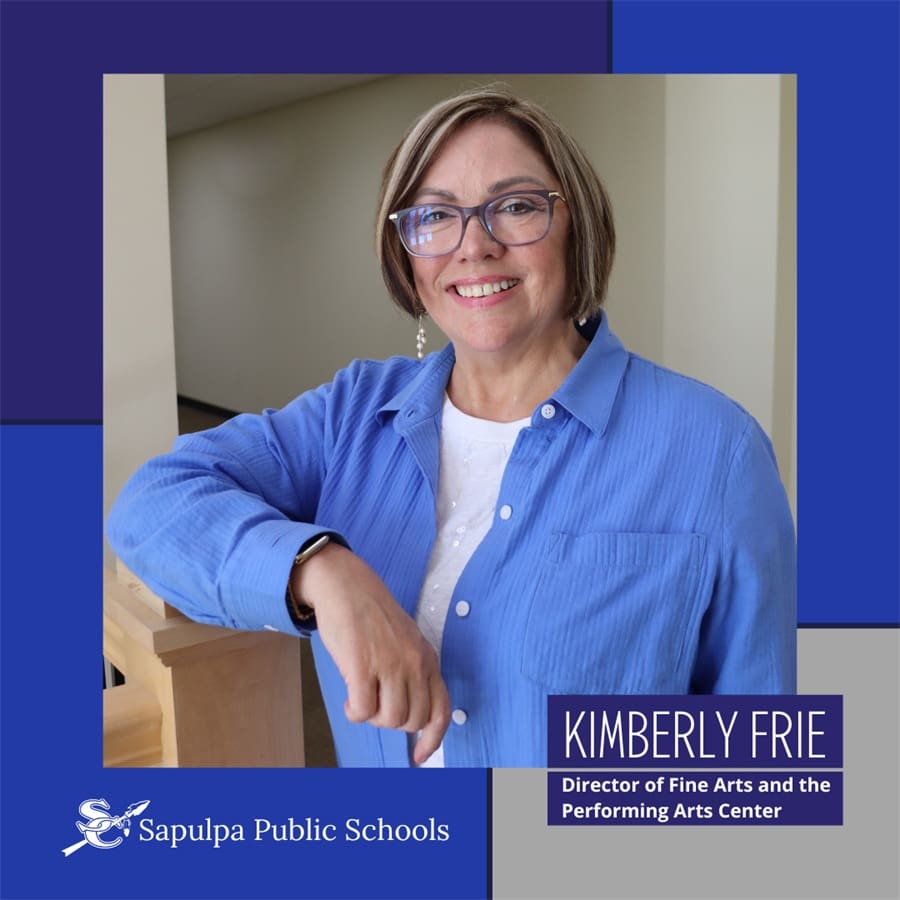
“He wanted to create an opportunity to use this space for not only the students, which is first and foremost, but also to give the building an opportunity for community members to come and enjoy world-class professional performers,” Frie said in an episode of The Timeloop this week.
More than a school auditorium
Frie said the center will be among the nicest performing arts facilities in Oklahoma, equipped with state-of-the-art sound and lighting systems.
Its 1,200 seats were designed to provide viable sightlines throughout the auditorium, including from the mezzanine. Unlike venues where sound equipment, towers or other obstructions make some seats unusable, Frie said all 1,200 seats should be available for performances.
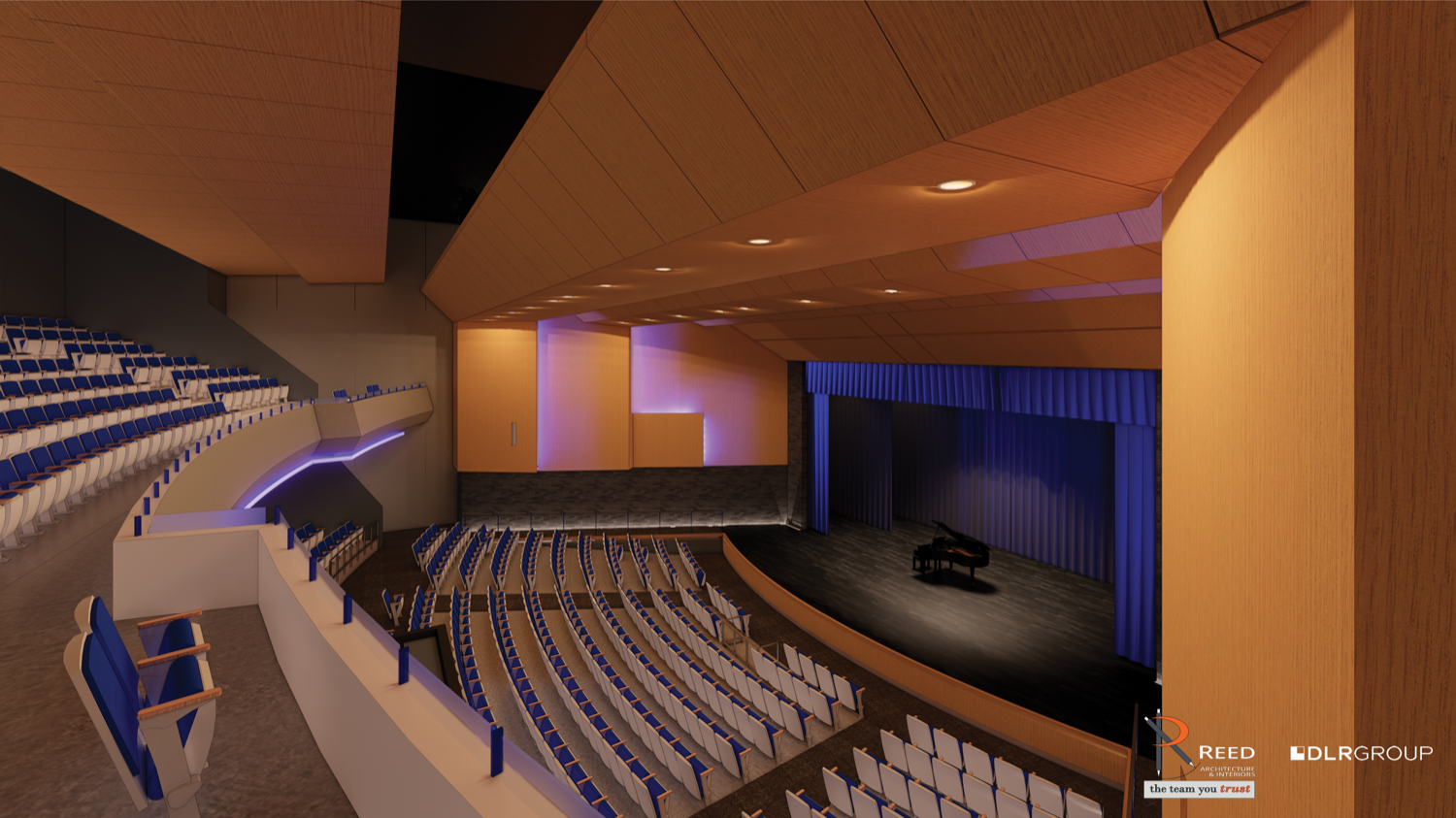
The stage will include an orchestra pit capable of holding as many as 62 musicians. A hydraulic lift will allow the pit to be lowered when needed or covered to extend the stage approximately 10 feet closer to the audience.
The facility will also have a fly system for moving scenery, curtains and backdrops above the stage, along with large wings that will allow scenery to be rolled on and off. An orchestra shell can be installed for band, choir and orchestra concerts.
Those features will give Sapulpa students the ability to produce performances on a scale that has not previously been possible in the district.
“We’ve never been able to have all four elementary schools perform on the stage at once,” Frie said. “Now we will have that opportunity because we’ll have the space for the kiddos, and we’ll have enough seating for all of the parents.”
The building will also contain the district’s band and choir rooms and a separate 100-seat black box theater. The smaller theater can be configured in several arrangements for plays, meetings and performances in the round.
Student performances and district activities will be placed on the calendar before outside events. The PAC will host school plays, musicals, concerts, assemblies and district gatherings before available dates are offered for professional programming.
Because of the auditorium’s complicated sound, lighting and theatrical systems, Frie said it will likely be one of the final parts of the new school complex to open. The PAC could be completed approximately one month to six weeks after the remainder of the school, with a possible opening in August or September 2027.
Frie has already begun communicating with professional performers and touring productions about appearing during the center’s first season, although dates cannot be finalized until the construction schedule becomes clearer.
A separate foundation for professional programming
Although the PAC is part of the district’s new school construction, school money cannot be used to pay professional artists who are not participating in district activities.
To support that side of the center’s operations, Frie helped establish the PAC66 Foundation as a separate nonprofit organization.
Frie spent much of the previous school year working with attorneys and the IRS to incorporate the foundation and secure its status as a 501(c)(3) organization. The foundation can accept tax-deductible donations and use those funds to hire professional performers, market events and cover other expenses outside the school district’s mission.
School productions will continue to be supported through district money, education-related grants and donations made for school purposes. Professional concerts and touring productions will be handled separately through the PAC66 Foundation.
“If I want to bring in an artist that is not somebody who is school-district related, I would not be able to pay them for their services with school-district money,” Frie said.
She used Oklahoma entertainer Reba McEntire as an example—not as a performer currently being booked—to explain why the foundation is necessary. An outside artist’s fee and the cost of promoting and producing that performance would have to be paid through private funds and ticket revenue rather than the school district.
The foundation will continue raising money after the center opens. Future fundraising could support concert series, individual performances and general operating needs. Businesses may also have opportunities to advertise in programs or sponsor events.
A chandelier becomes a community project
One of the foundation’s first major fundraising efforts is focused on a prominent feature planned for the PAC lobby.
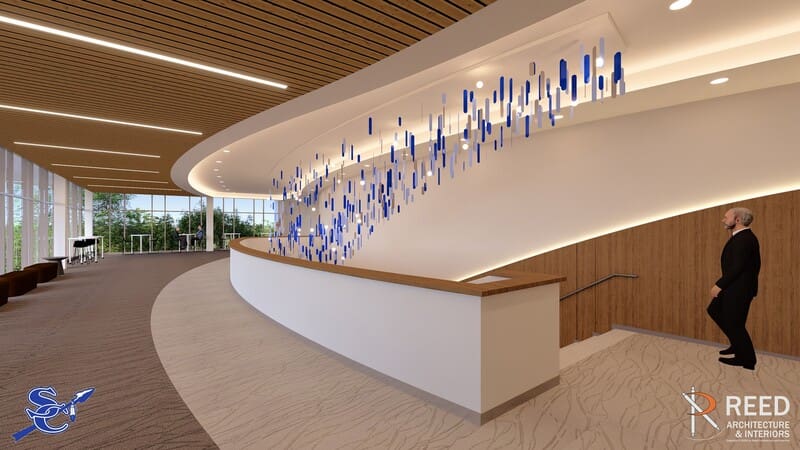
A large chandelier featuring suspended blue and clear pieces is planned above the curved staircase. The lobby’s architectural elements were designed to reflect forms found in nature, including the flowing appearance of wheat fields.
The chandelier originally selected for the building was no longer being manufactured. When the design team returned to the drawing board, it found a more elaborate replacement—but it came with an approximately $100,000 price tag.
The chandelier was not essential to the operation of the building. A less expensive light fixture could have been installed instead. However, longtime Sapulpa resident and alumnus Jim Korn believed the chandelier could become a defining feature of the center and began personally promoting a campaign to fund it.
“This project spoke to his heart, and he made it something he was determined to make happen,” Frie said.
The campaign has raised approximately 75 percent of its goal, leaving about $25,000 still to collect. Organizers hope to raise the full amount by the end of 2026, allowing enough time for the chandelier to be ordered and installed before the center opens.
Donations of any amount are accepted. Donors giving at designated levels will have their names included on a permanent plaque near the lobby staircase. The recognition levels are $1,500 for bronze, $5,000 for silver and $10,000 for gold.
Frie said people who cannot give at those levels can still participate.
“If you can give $25, that’s still $25,” she said.
Donation information is available through the Performing Arts Center’s page on the Sapulpa Public Schools website and its Facebook page. Until online giving is available, checks can be mailed or delivered to Frie at the Washington Administration Building.
Bringing people and in turn, the business, to Sapulpa
Beyond its educational value, supporters believe the Performing Arts Center can attract visitors from surrounding communities such as Jenks, Glenpool and Broken Arrow.
Professional performances could bring visitors into Sapulpa who may eat at local restaurants or visit downtown stores before attending a show. Frie said that activity could generate additional sales-tax revenue while creating excitement throughout the community.
For Sapulpa students, the effects could be more personal. Frie has performed around the world, including two seasons with the New York City Opera at Lincoln Center. She said that experience helps her understand what the new facility could make possible for young performers.
“There are kids who go through their whole life and never get an opportunity to perform in a venue like this one,” Frie said. “These kids are going to get to do that.”
She believes the center will become a community asset that lasts for generations.
“It’s going to be something that this community will be able to enjoy,” Frie said. “Your children’s children will be able to enjoy it.”