
For nearly half a century, the Frisco Railroad was the engine that powered Sapulpa.
It was the city’s largest employer, the reason many businesses existed, and the foundation upon which the modern community was built. So when the railroad’s division headquarters ultimately moved to Tulsa in what local historian Kirby Davis calls “The Great Divorce of 1928,” Sapulpa found itself searching for a new identity.
According to Davis, that identity arrived just in time—and it came on four wheels.
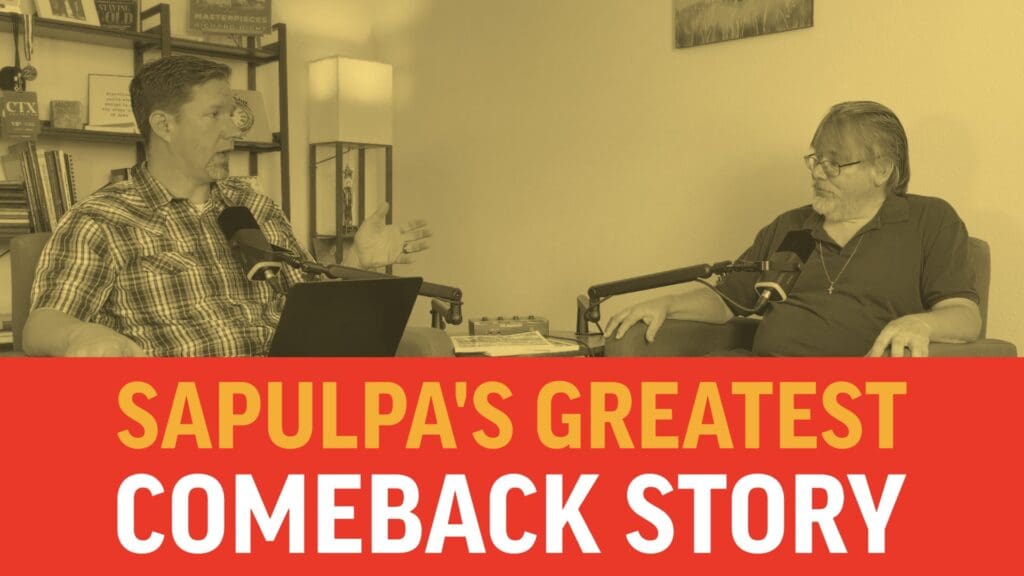
The author recently joined The Timeloop Live to discuss Book Two of The Great Beckoning, his latest work chronicling Sapulpa’s history through the rise of Route 66. While the conversation covered everything from the birth of the automobile to Walmart’s impact on downtown retailers, one theme surfaced again and again: Route 66 wasn’t just another highway. It became the lifeline that carried Sapulpa into its next chapter.
“The railroad was the heartbeat of this community for almost 50 years,” Davis said during the interview. “Everything was built around the railroad.”
That reality makes the timing of Route 66 all the more remarkable.
As Sapulpa entered the Great Depression and the Dust Bowl after losing its largest employer, the nation’s growing highway system—and eventually Route 66—created new opportunities for travelers, businesses and commerce. The same road that carried thousands of Oklahomans west in search of a better life also brought visitors through downtown Sapulpa, fueling filling stations, restaurants, hotels and retailers.
Davis spends much of the book explaining that this transformation didn’t happen overnight. Before readers ever reach Route 66, he takes them back to the earliest days of the automobile, arguing that the invention of affordable cars reshaped nearly every aspect of American life.
“The automobile changed everything,” he said.
Sapulpa recognized that change earlier than many communities. City leaders invested in better roads years before automobiles became common, believing improved infrastructure would attract residents, businesses and investment. As cars became affordable and highways expanded, communities once separated by hours of wagon travel suddenly became connected.
That connection, however, came with unintended consequences.
Long before modern shopping centers, Sapulpa merchants worried that improved highways would make it just as easy for residents to spend their money somewhere else. Davis points to early newspaper campaigns encouraging shoppers to buy locally, recognizing that every dollar spent in Sapulpa strengthened the city’s economy.
“They started realizing not only that the railroad was threatened,” Davis said, “but that their lives and their whole concept was threatened.”
Eventually, the turnpikes, four-lane highways and later big-box retailers changed the way Americans shopped. Downtowns across the country struggled, and Sapulpa was no exception.
Yet Davis believes the city’s story didn’t end there.
He sees today’s downtown revitalization—including restored historic buildings, new restaurants, local entrepreneurs and projects like the Route 66 Christmas Chute—as evidence that communities can reinvent themselves when people choose to invest in them.
“It takes people who believe and invest,” he said. “People who are willing to put their skin in the game.”
Even so, Davis believes Sapulpa’s resurgence is still unfolding.
“Our critical mass is not there yet,” he said. “We’re so close to that.”
The hour-long conversation explores far more than can fit into a single article, including the birth of franchising along Route 66, why early filling stations advertised clean restrooms, the evolution of downtown shopping, and how national trends shaped Sapulpa’s growth over more than a century.
You can watch the full interview on The Timeloop Live below. The Great Beckoning Books One and Two are available through Amazon, the Sapulpa Historical Society Museum, Sapulpa Main Street and other local retailers.


